Every reused tote is a bottle that never had to be made.
IBC tote sustainability follows one rule: reuse first, then repurpose, then recycle, then dispose. Reconditioning a tank avoids the energy and virgin HDPE of building a new one, and end-of-life granulation plus steel recycling keeps about 99% of each unit out of the landfill.
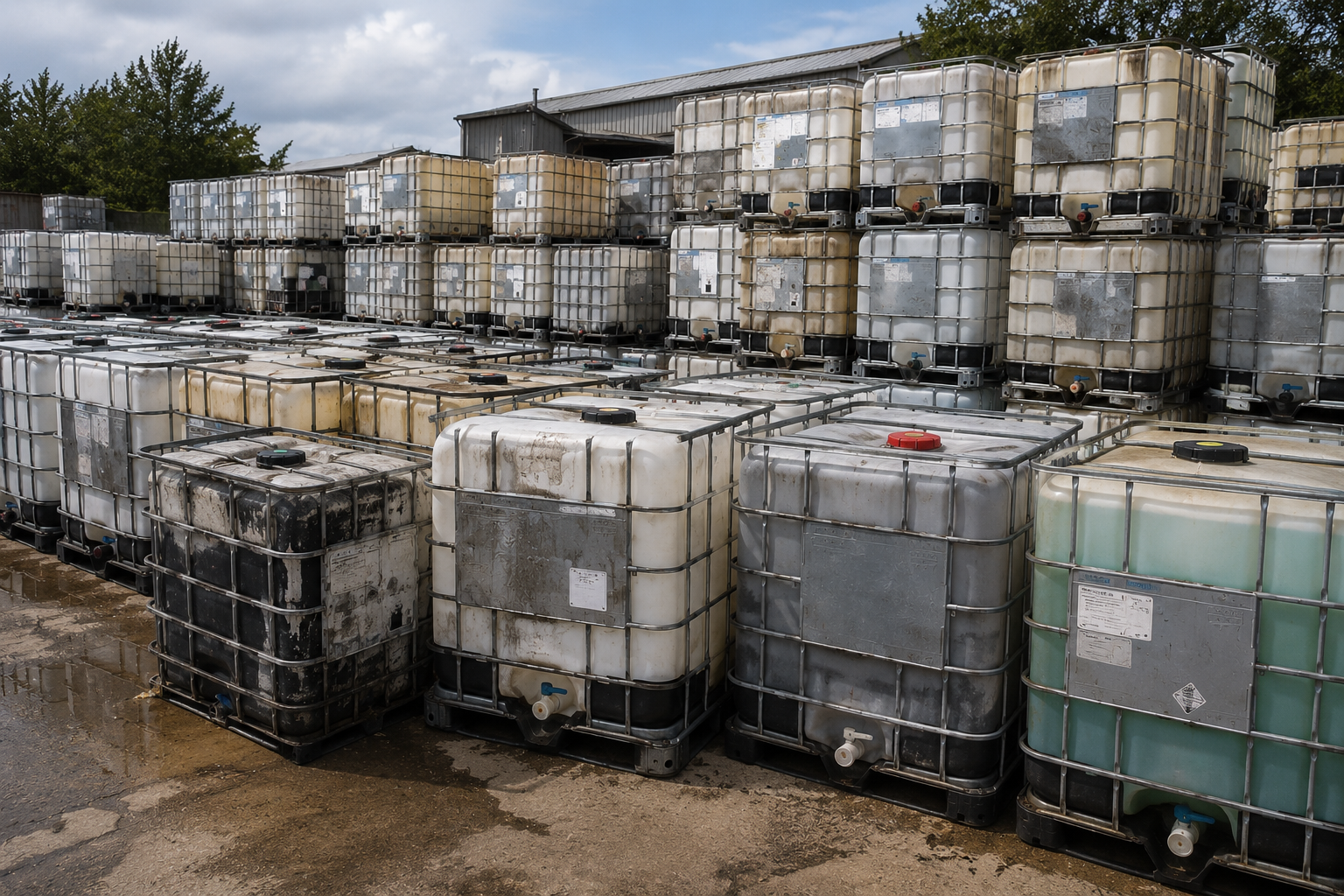
The footprint you avoid by not buying new.
Conservative, manufacturing-avoidance figures for a single 275 or 330 gallon tote given a second service life.
How much do your totes keep out of the landfill?
Drag the slider to your fleet size and watch the avoided plastic, carbon, water, and landfill volume add up. Every one of these units is a tote we helped reuse instead of remake.
25
reconditioned IBC totes
Estimates based on manufacturing-avoidance factors for standard 275/330-gallon HDPE totes reused in place of new production. Real-world savings vary by tote condition and service life — reuse multiplies the benefit every refill.
Reuse beats recycle beats landfill.
Reuse
Recondition and refill the tote. No remanufacturing energy, no virgin resin — the single biggest environmental win and where every unit starts its journey with us.
Repurpose / upcycle
Give retired bottles a second calling as rain barrels, planters, compost bins, and aquaponics beds. Still no melting required — just a new job.
Recycle
When a bottle truly can't be reused, we granulate its HDPE into feedstock for new products and bale the steel cage for the mill.
Dispose
An absolute last resort for the small fraction that can't be reclaimed — typically under 1% of a unit by weight.
What happens to a tote that's truly done.
Even the best HDPE bottle eventually reaches the end of its usable life. When it does, nothing is wasted. The bottle is granulated into clean flake that becomes feedstock for new molded products. The galvanized steel cage and pallet are baled and sent to the mill, where steel recycles endlessly without loss of quality.
Between reuse, repurposing, granulation, and steel recovery, roughly 99% of every unit stays in the circular economy. Learn how we handle it on our recycling & reconditioning page.
A loop, not a line
The traditional model is linear: make, use, throw away. A circular model keeps materials moving through repeated cycles of use. Because we buy, recondition, rebottle, recycle, and haul totes, a single tank can loop through our yard many times — each pass avoiding the manufacturing of a brand-new unit. Buying reconditioned or upcycled is how you plug into that loop.
What we promise
- Reuse before recycle, recycle before landfill — on every tote.
- Honest grading so tanks get reused, not scrapped by mistake.
- ~99% diversion of every unit we handle.
- Short, central-US freight lanes to cut carbon per mile.
- End-of-life granulation and steel recovery for anything past reuse.
Buying used isn't recycling. It's preventing manufacturing.
The greenest gallon of capacity is the one that never required a new bottle to be molded. When you choose a used, reconditioned, or rebottled tote, you avoid the energy, the virgin HDPE, and the process water of building a fresh unit — a far larger carbon saving than any downstream recycling can deliver. A tote reused ten times spreads its original manufacturing footprint across ten service lives. That's the most powerful sustainability lever in bulk packaging, and it's the one we pull every single day.
The impact, answered.
How much of an IBC tote can actually be reclaimed?
Why is buying a used tote better than recycling one?
What happens to a tote at the end of its life?
Does buying reconditioned really lower carbon emissions?
Ready to reclaim?
Whether you're buying twenty totes or offloading a yard full of empties, tell us what you need. We reply by email within one business day.